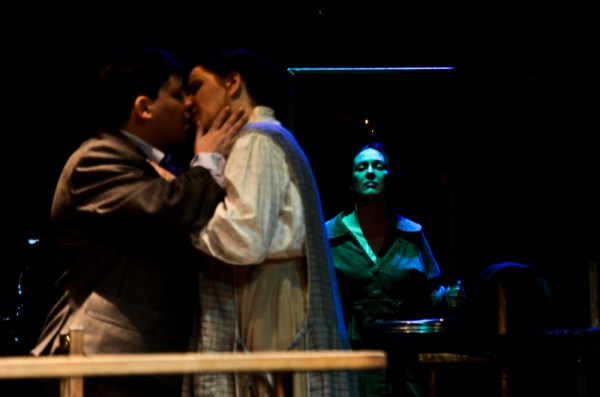
“Tuesdays at Tescos tells the story of Pauline, a loving daughter, carer and trans woman in an astonishing and vulnerable site-specific production.
Lyn Harris’ production was first performed at the MAC, Belfast in June 2014 before touring to Armagh, Cookstown and Strabane. ”
Peter Quigley acted on the streets, while the audience, isolated by glass walls, heard him through speakers. It was an interesting set-up with all the sounds being technologically mediated one way or another.
Some music I’ve composed for the show:
(Thank you, Debussy)
Paper published on Semiosis (transdisciplinary journal of semiotics), addressing a particular design approach for digital instruments for live electronic improvisation.
It’s based on my master’s research at UFPR, Brazil.
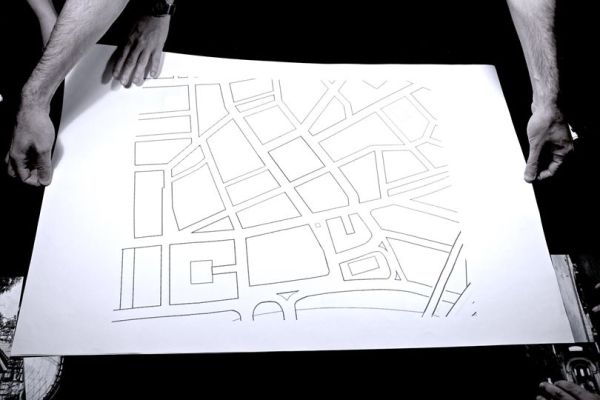
Come Across is a soundwalk based performance. The work presents a listening focused preparation strategy that involves multiple simultaneous soundwalks, mapping, audio and video recording. Such preparation stage leads to a concert performance that re-enacts the soundwalks by drawing on map in an exercise of listening and reminiscing.
The work was developed collectively by Diogo Alvim, Eduardo Patricio and Rui Chaves (Unlikely Places ensemble).
In 2012, in 10-minute long a poster session part of Global Composition Conference in Darmstadt, Germany, we talked about Come Across’ general concept and presented a short video documentation with excerpts of a rehearsal realised in the Sonic Lab at the Sonic Arts Research Centre (Belfast). This was a good opportunity to evaluate other people’s response to the work’s proposal and it helped us to format the version for a future performance.
In 2013, we (Unlikely Places) performed the piece during the Sonorities Festival in Belfast.
Later the same year, in Lisbon, as part of Echoes#2* programme, the Unlikely Places Ensemble realised a related four-day workshop (from 19 to 22 September).
* Echoes is a program for the city of Lisbon that aims to put together thoughts, experiences and interventions on the relationship between LISTENING and PLACE (2013).
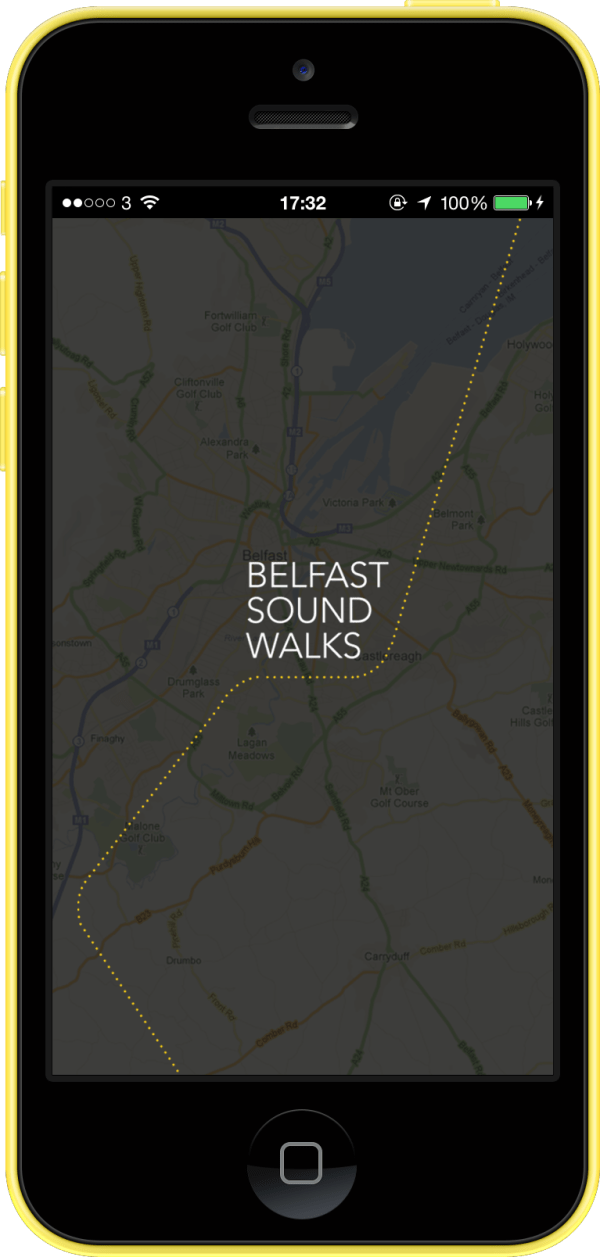
Lock 1 memories is a GPS triggered soundwalk mobile application I’ve developed in 2013. It is available for Android and iOS platforms. It presents a semi-open interactive composition based on environmental sounds designed to share the author’s experience of place and trigger potential new insights on the listener about the Lagan Towpath area, around the weir near the Belfast Boat Club. This app-piece is part of a larger project called Belfast Soundwalks.
“Based on the true story of Eugenia Falleni, who passed as a man in early 20th century Australia, Lachlan Philpott’s play picks apart the rules of gender and sexuality that punish any transgression in a time when even being able to identify oneself as ‘trans’ or ‘lesbian’ was a long way off for most people There is no way to know what really happened behind the closed doors of bedrooms of the past and Philpott playfully explores this ambiguity and confusion to raise questions about our own assumptions of gender.”
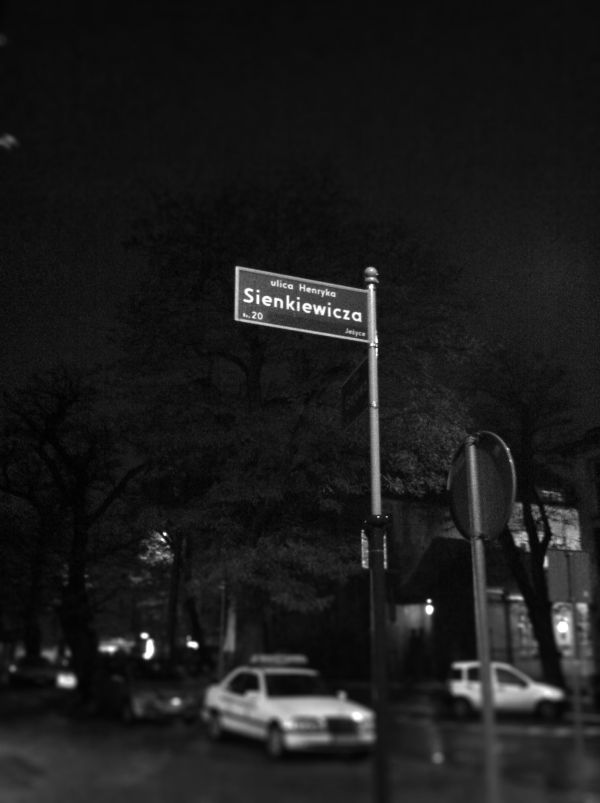
Sienkiewicz Pipes is an environmental sound based immersive installation. The piece was inspired by a field recording made on Sienkiewicz Street in the city of Poznan, Poland, in mid-2012.
Sound and light pulses are controlled by the user in a small room equipped with a quadraphonic sound system.
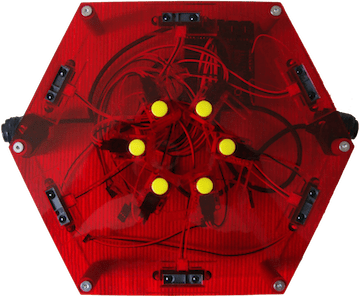
Zin is a digital instrument/interface I’ve developed between 2009 and 2011. It is Arduino based and its synthesizer is implemented in both Pure Data and Max/MSP.
I had the opportunity to perform with Zin in a few occasions such as:
(2011) FILE Festival – Sao Paulo/Brazil
(2012) Sonorities Festival – Belfast/UK
(2012) iscMME conference – Leeds/UK
(2013) NIME conference – Daejeon-Seoul/South Korea
Developed by Diogo Alvim, Eduardo Patricio, Pedro Rebelo and Rui Chaves, No Chords Attached “(…) is a site-specific piece that explores the physical, temporal and poetic strategies between two mobile remote performers and a pianist in a more conventional performance space (Chaves 2013, p. 35)”. It proposes a non-conventional performance situation combining soundwalk and instrumental music, making use of a feedback system that enables sonic relocations and superimpositions between contrasting physical spaces.
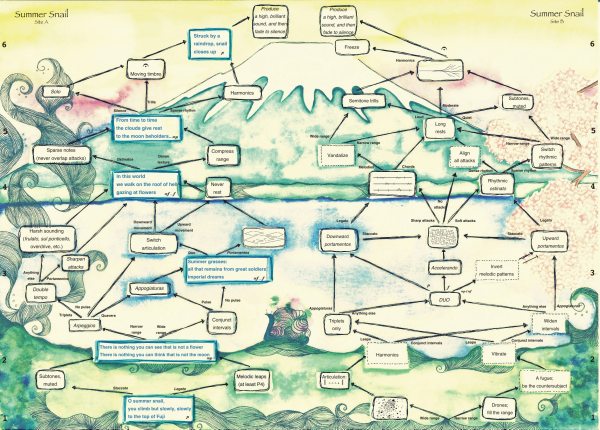
Summer Snail is a game-inspired network piece by Felipe Hickmann that brings together two remote musician groups and two remote audiences.
My role: design of a dynamic graphic score system split in 3 applications, one for each group and a third one for the conductor/referee.
The piece is structured as a game with the aid of a dynamic graphic score (the illustration of a mountain). Both groups compete against each other to try and get to the top of the mountain.
This video shows one group of musicians in Belfast (UK) at SARC (Sonic Arts Research Centre) playing with a remote group located at University of Sao Paulo (Sao Paulo/Brazil).




 Eduardo Patricio