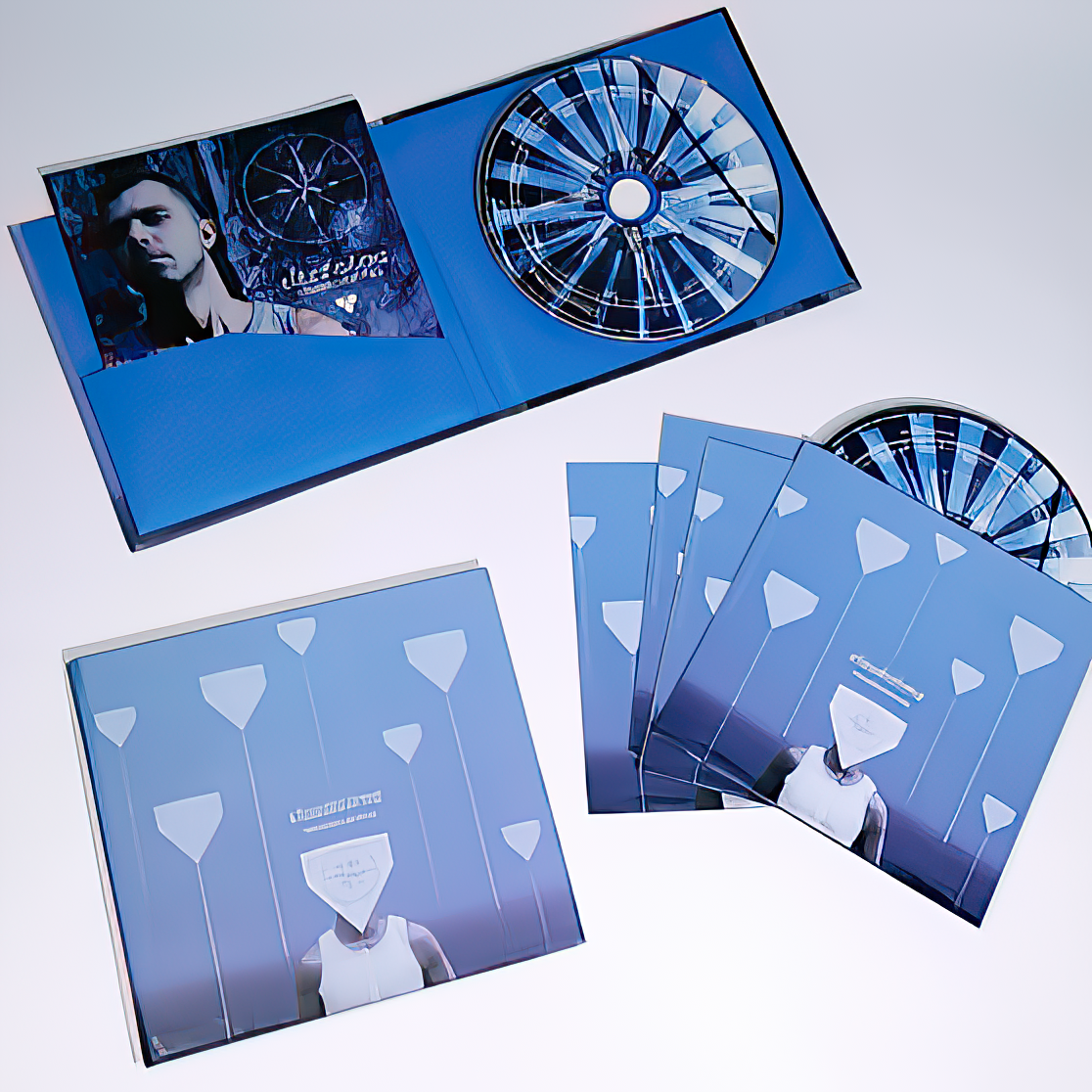
Claudio Lima’s 3rd album, Rosa dos Ventos, is an interesting project that brings together regional Maranhao (Brazilian state), pop, classical and electronic music. It’s a song album, with several music personae glued up by Claudio’s beautiful and powerful voice.
A long project, following the singer’s process of composition and repertoire selection. In 2013, I started working on the album’s initial arrangements, defining its aesthetic direction. I worked on it for almost 4 years as arranger and producer. In May 2017, I led a group of musicians for the album premiere concert, playing MIDI guitar, drums, pandeiro and synths.
This is the result of my practice based research at Queen’s University Belfast (more specifically, at SARC), supervised by Dr. Pedro Rebelo and Dr. Paul Stapleton (2nd supervisor).
Here, you can find the full portfolio commentary in PDF, related posts and video documentation for each piece.
Abstract
Through a creative portfolio and an analytical and critical commentary, this research investigates the use of spatial references in the composition of semi-open environmental sound works. The portfolio explores a number of strategies to make use of spatial references as formal compositional components to enable more intuitive performance/reading experiences. The pieces present a number of electronically mediated scenarios in varied formats; concert, installation and mobile application. Counting on the intuitive way one tries to constantly identify surrounding spaces, each piece uses physical (performance/presentation spaces) and representational devices (illustrations, maps, video projections, spatialised sound etc.) to articulate and delimitate semi-open artistic experiences. Such ambiguous scenarios are enabled by both the unpredictability of elements of each work and the dependence on the subjective interpretations of the agents involved in the process. The creative processes presented here in a descriptive, analytical and critical manner attempt to make an artistic contribution and provide documental material for future reflection about related practices.
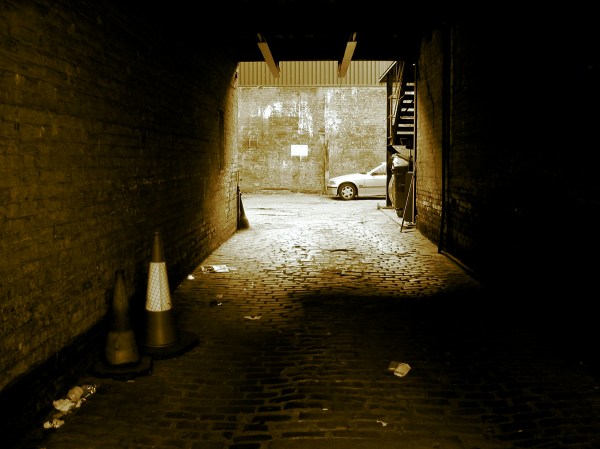
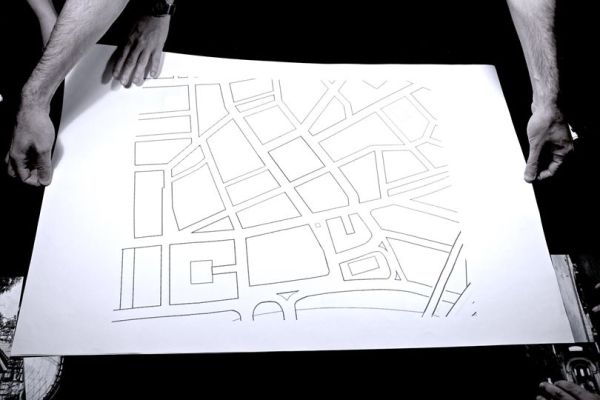
Come Across is a soundwalk based performance. The work presents a listening focused preparation strategy that involves multiple simultaneous soundwalks, mapping, audio and video recording. Such preparation stage leads to a concert performance that re-enacts the soundwalks by drawing on map in an exercise of listening and reminiscing.
The work was developed collectively by Diogo Alvim, Eduardo Patricio and Rui Chaves (Unlikely Places ensemble).
In 2012, in 10-minute long a poster session part of Global Composition Conference in Darmstadt, Germany, we talked about Come Across’ general concept and presented a short video documentation with excerpts of a rehearsal realised in the Sonic Lab at the Sonic Arts Research Centre (Belfast). This was a good opportunity to evaluate other people’s response to the work’s proposal and it helped us to format the version for a future performance.
In 2013, we (Unlikely Places) performed the piece during the Sonorities Festival in Belfast.
Later the same year, in Lisbon, as part of Echoes#2* programme, the Unlikely Places Ensemble realised a related four-day workshop (from 19 to 22 September).
* Echoes is a program for the city of Lisbon that aims to put together thoughts, experiences and interventions on the relationship between LISTENING and PLACE (2013).
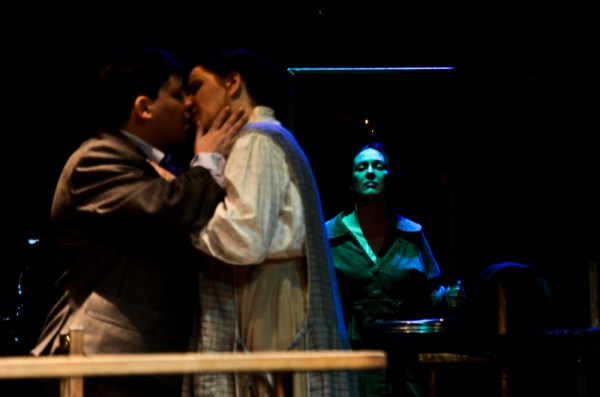
“Based on the true story of Eugenia Falleni, who passed as a man in early 20th century Australia, Lachlan Philpott’s play picks apart the rules of gender and sexuality that punish any transgression in a time when even being able to identify oneself as ‘trans’ or ‘lesbian’ was a long way off for most people There is no way to know what really happened behind the closed doors of bedrooms of the past and Philpott playfully explores this ambiguity and confusion to raise questions about our own assumptions of gender.”
Developed by Diogo Alvim, Eduardo Patricio, Pedro Rebelo and Rui Chaves, No Chords Attached “(…) is a site-specific piece that explores the physical, temporal and poetic strategies between two mobile remote performers and a pianist in a more conventional performance space (Chaves 2013, p. 35)”. It proposes a non-conventional performance situation combining soundwalk and instrumental music, making use of a feedback system that enables sonic relocations and superimpositions between contrasting physical spaces.
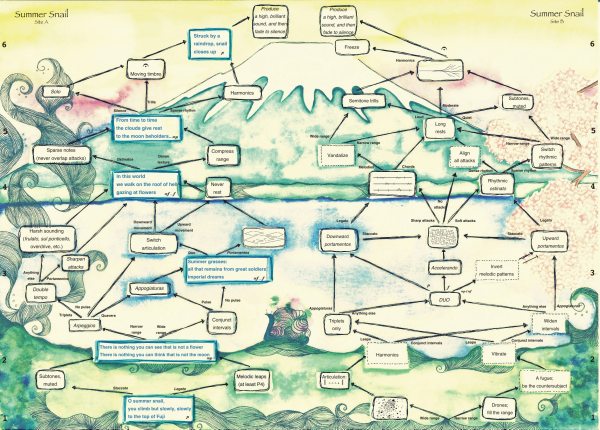
Summer Snail is a game-inspired network piece by Felipe Hickmann that brings together two remote musician groups and two remote audiences.
My role: design of a dynamic graphic score system split in 3 applications, one for each group and a third one for the conductor/referee.
The piece is structured as a game with the aid of a dynamic graphic score (the illustration of a mountain). Both groups compete against each other to try and get to the top of the mountain.
This video shows one group of musicians in Belfast (UK) at SARC (Sonic Arts Research Centre) playing with a remote group located at University of Sao Paulo (Sao Paulo/Brazil).
Bruno Batista and Claudio Lima’s project. Demo version of the song ‘Sobre anjos e arraias’. I did the arrangement and recorded the bass, synths, piano and percussion.

 Eduardo Patricio